

RTP Explained:
What It Really Means & Why I Always Check It
RTP is one of the first things I check before playing any online slot.
In fact, I won’t even make one 10c spin before I’ve checked it.
I’ve been playing slots for close to 20 years, and I first really started paying attention to RTP around 15 years ago. I remember watching experienced slot streamers talking about it and initially thinking: what the hell are they going on about?
Once I started reading about RTP and understanding what those percentages actually meant, it completely changed how I chose slots — and eventually how I judged casinos as well.
I’m not going to pretend I’m an RTP mathematician. I’m a player who has spent years checking RTP before playing and has seen the same games offered at very different percentages.
So in this guide I’m going to combine what I’ve learned as a player with the actual mathematics behind RTP.
And there’s an important distinction.
RTP cannot tell you whether you’re going to win tonight.
What it can tell you is the theoretical return built into the game you’re about to play.
For a regular player, I think that’s something worth knowing.
What does RTP mean?
RTP stands for Return to Player.
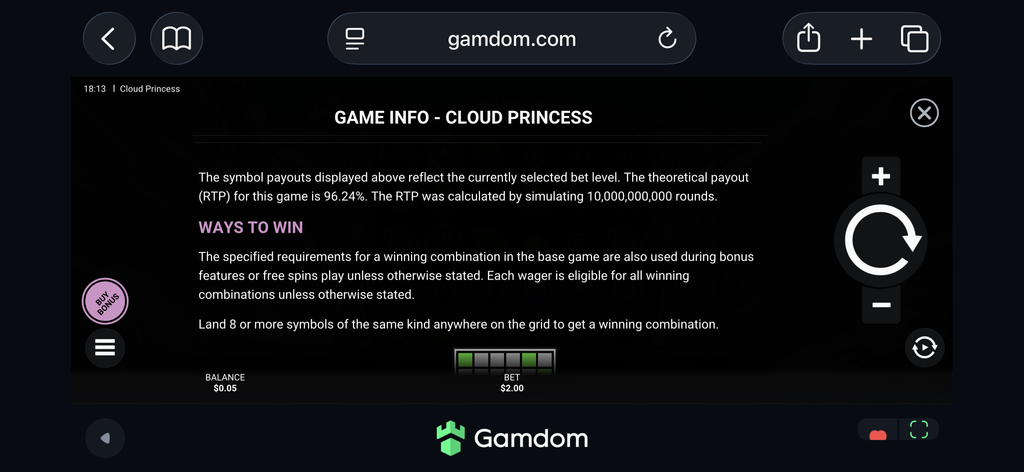
If an online slot has a theoretical RTP of 96%, the game is mathematically designed to return approximately 96% of the money wagered as prizes over a sufficiently large amount of play.
The remaining 4% represents the game’s theoretical house edge.
So:
| RTP | Theoretical house edge |
| 97% | 3% |
| 96.5% | 3.5% |
| 96% | 4% |
| 95% | 5% |
| 94% | 6% |
| 91% | 9% |
But here’s the mistake I think players need to understand immediately:
96% RTP does NOT mean you deposit $100 and the game gives you $96 back.
You could deposit $100 and lose it.
You could deposit $100 and finish with $30.
You could also deposit $100, hit a huge bonus and finish with $2,000.
The Gambling Commission describes RTP as an average achieved over a significant number of game plays rather than something achieved every time an individual plays.
That’s why I think the words theoretical RTP are so important.
Why RTP matters so much to me
I play slots regularly, so RTP matters to me considerably more than it might to somebody who has a small flutter once every few months.
My personal target is generally around 96% or higher.
I’ll sometimes accept around 95.5%.
At 95%, I’m already uncomfortable.
When I start seeing 94%, 92% or 91%, I’m normally looking for another game.
Those aren’t official definitions of high, medium and low RTP. They’re my personal cut-off points after years of playing.
And having a higher RTP certainly doesn’t mean I’m going to win.
What I’m interested in is the mathematical edge I’m accepting every time I wager.
96.5% RTP vs 94% RTP: does 2.5% really matter?
This is where RTP percentages can be deceptive.
If you put:
96.5%
next to:
94%
they don’t look enormously different.
They’re only 2.5 percentage points apart.
But look at the corresponding theoretical house edges:
96.5% RTP = 3.5% house edge
94% RTP = 6% house edge
That’s quite a difference.
If we simply illustrate the mathematical expectation over cumulative wagering, it looks like this:
| Cumulative amount wagered | 96.5% theoretical loss | 94% theoretical loss | Difference |
| $1,000 | $35 | $60 | $25 |
| $10,000 | $350 | $600 | $250 |
| $100,000 | $3500 | $6000 | $2500 |
These figures do not predict what an individual player will actually lose.
Someone could wager $10,000 through the 94% game and be massively ahead because they hit a huge win. Someone else could wager through the 96.5% game and lose considerably more than $350.
That’s volatility and randomness at work.
The table simply demonstrates the mathematical expectation built into the two games.
For me, if I’m offered exactly the same slot at 96.5% and 94%, I’m taking the 96.5% version every time.
Can better rakeback make a lower RTP worthwhile?
There is one exception I’d at least calculate before immediately rejecting the lower RTP.
Rewards.
Suppose Casino A has the game at 96.5%.
Casino B has it at 94%, but Casino B offers substantial rakeback or cashback.
Could that make Casino B better value?
Potentially — but you can’t simply add “20% rakeback” to 94% RTP and call it 114%.
You need to know what the reward percentage is actually calculated from.
Twenty percent of net losses is completely different from 20% of wagering. Deposit cashback is different again.
That’s why I look at RTP and casino rewards separately before considering their combined value.
Personally, though, I’d rather have strong RTP and strong rakeback than use rewards to compensate for poor RTP.
The same slot doesn’t necessarily mean the same RTP
This is probably one of the biggest lessons I’ve learned from checking RTP.
You can recognise the artwork.
Recognise the provider.
Recognise the features.
Recognise the bonus.
It looks like exactly the same game you played somewhere else.
That doesn’t mean you should assume the RTP is identical.
Some games are made available in multiple predefined RTP configurations.
For a concrete example, Hacksaw Gaming’s own website currently lists its game Lines with RTP configurations of 98%, 97%, 96%, 94%, 92% and 88%.
That’s why my rule is simple:
I check the individual game before I play it.
I don’t assume.


Same slot, Gates of Olympus 1000 different RTP. This is exactly why I check the game information rather than assuming I’m playing the same mathematical version.
A real example I found at Lucky Block: 91.20%
While updating my Lucky Block Casino review, I found a perfect example of why I still check RTP.
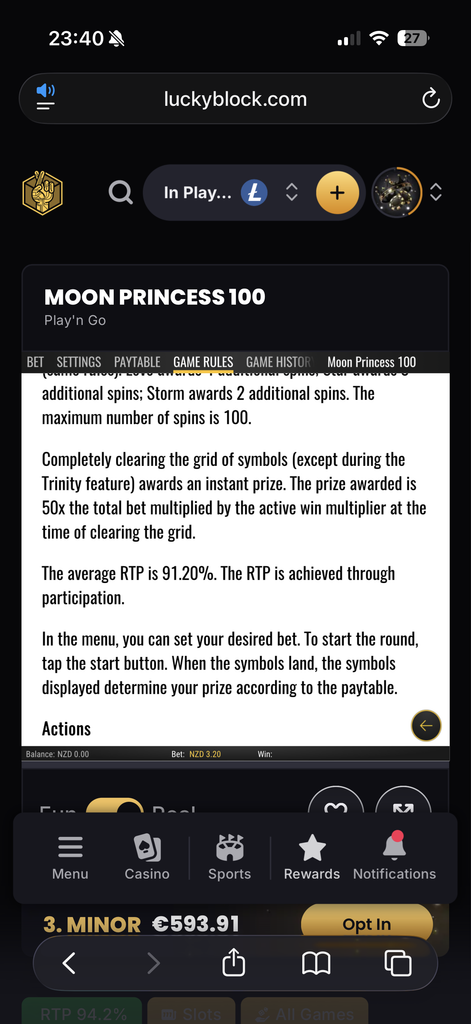
I opened Moon Princess 100 and checked the game information.
It displayed:
Average RTP: 91.20%
That immediately stood out to me.
91.20% is far below the sort of RTP I personally choose to play.
It doesn’t mean somebody can’t win on it. Someone could open it today, hit an enormous win and walk away in profit.
That’s precisely why RTP needs to be understood correctly.
But I personally wouldn’t play that configuration.
I found Sugar Rush 1000 at 94.50% too
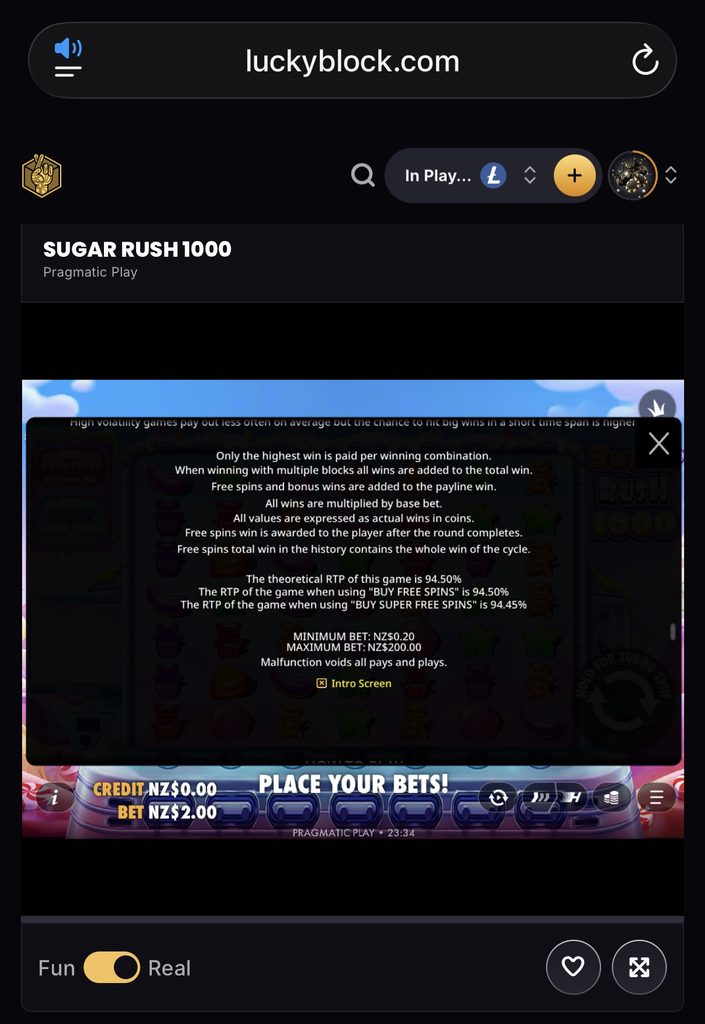
I checked Sugar Rush 1000 during the same testing and found the standard game displaying 94.50% RTP.
Again, somebody could have a fantastic session at 94.50%.
My issue isn’t that a 94.50% slot “can’t win.”
It obviously can.
It’s simply below the mathematical return I personally look for when alternatives are available.
Does higher RTP mean your $100 will last longer?
This is something I used to simplify too much myself.
My instinct as a player has always been:
higher RTP = more money being recycled back through wins = longer gameplay.
Over the underlying mathematics, a higher RTP means a lower theoretical house edge.
But it would be wrong for me to tell you:
$100 on a 96% slot will definitely last longer than $100 on a 94% slot.”
It might not.
The $100 on the 96% game could disappear quickly.
The $100 on the 94% game could hit a 500x win and keep you playing for hours.
RTP doesn’t determine the outcome of your next session.
The Gambling Commission’s own guidance gives a useful illustration of this distinction: an operational game can have an actual measured RTP above or below its designed theoretical RTP over a particular period, with volatility affecting how widely results can deviate. As the volume of play increases, that tolerance generally becomes narrower.
So I’d now describe my reasoning more precisely:
All else being equal, I prefer to wager against the smaller theoretical house edge.
That’s why I choose the higher RTP.
RTP doesn’t “owe” you anything
This might be the most important part of this entire guide.
Imagine you’ve played thousands of spins on a 96% RTP slot and your personal results have been terrible.
The game doesn’t suddenly think:
“I’d better pay this player because they’re below 96%.”
For a fully random game, previous wins and losses don’t change the probability of the next outcome simply because you’re running below the theoretical RTP. The Gambling Commission explicitly notes this for random games: the odds of the current game aren’t affected by previous wins or losses.
So don’t fall into the trap of thinking:
“I’ve lost for ages, so a bonus must be due.”
It isn’t.
That’s also why I jokingly describe playing slots as:
“I’m going to play the random number generator.”
Because ultimately, that’s what I’m dealing with.
RTP and volatility are not the same thing
This is another area where players can easily mix things up.
You could have two games that both advertise 96% RTP, while the experience of playing them feels completely different.
One might regularly produce relatively small prizes.
Another might have brutal stretches of little happening but include extremely large prizes in its mathematical model.
That’s where volatility comes in.
The Gambling Commission describes highly volatile games as potentially containing prizes in the “very large but rare” category, while lower-volatility games are generally more predictable and weighted more towards smaller, more frequent prizes.
Personally, I tend to like the middle ground.
I enjoy the possibility of a decent win, but I also like getting some play from my balance.
If I do choose a highly volatile slot, having a strong RTP becomes particularly attractive to me.
But again:
High RTP does not remove high volatility.
A 97% high-volatility game can still destroy my balance very quickly.
Hit frequency isn’t RTP either
Hit frequency matters to me as a player.
I enjoy slots where something happens reasonably regularly. Sometimes I’ll deliberately choose something much harsher, but generally I like finding that middle sweet spot between frequent hits and meaningful win potential.
However, there’s something important I’ve learned:
High hit frequency doesn’t automatically mean high RTP.
Imagine a slot produces a “winning” result frequently, but many of those wins are smaller than the original stake.
It can feel active without necessarily offering a particularly high theoretical return.
Likewise, a game can theoretically have a strong RTP while allocating more of that return to less frequent larger prizes.
So when I’m assessing a game, I don’t treat these as interchangeable:
RTP tells me the theoretical return.
Volatility tells me about the distribution/risk of the returns.
Hit frequency tells me how frequently defined winning outcomes occur.
Together, those numbers tell me considerably more about what I’m about to play than RTP alone.
Can a 94% slot beat a 97% slot?
Absolutely.
Let’s give two players $100.
Player A chooses a 97% RTP slot.
Player B chooses a 94% RTP slot.
Two hours later:
Player A has $0.
Player B has $500.
There is nothing inherently contradictory about that result.
The 97% RTP was never a promise to Player A.
And Player B winning doesn’t magically make 94% mathematically superior to 97%.
This is why I disagree when someone has one terrible session and says:
“RTP is rubbish. I played a 97% game and lost everything.”
They’re judging a long-run mathematical property using one tiny sample of random outcomes.
The Gambling Commission makes essentially the same point: RTP cannot meaningfully be assessed from one person’s gameplay alone; one person might go 50 spins without winning while another could win repeatedly over only a few spins.
How I check RTP before playing a slot
This is something I think every slot player should learn.
I genuinely won’t make one spin until I’ve checked.
Usually, I’m looking for something along the lines of:
Menu → Information → Help → Game Rules → Paytable
The exact location depends on the provider.
Sometimes the RTP is immediately obvious.
Other providers put it inside several paragraphs of game rules.
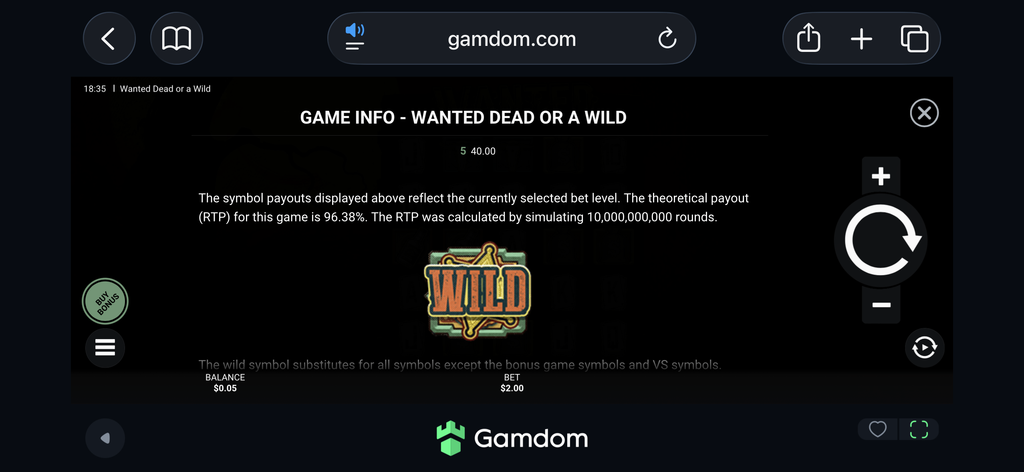
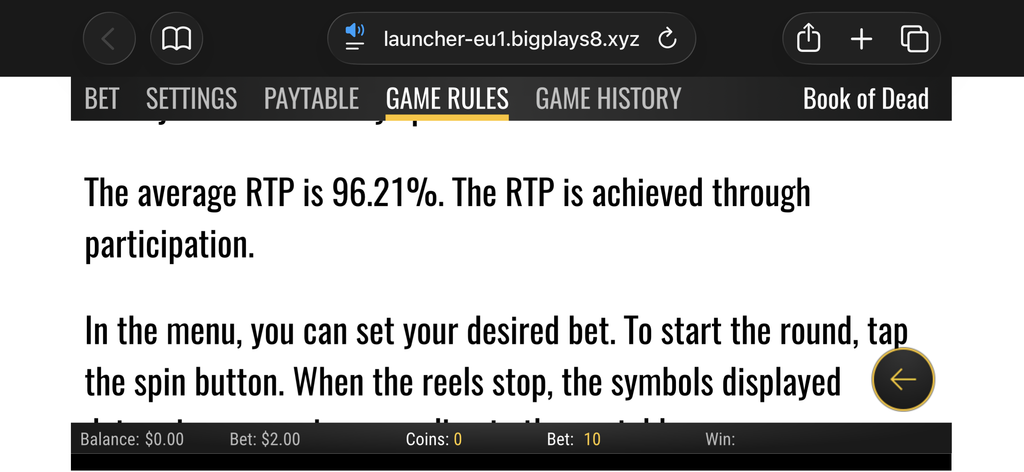
The Gambling Commission’s technical standards require information enabling players to make an informed decision about their chances — including RTP, house edge or probability information as applicable — to be easily available before committing to gamble. It can appear within the game, help pages or supporting material.
My advice is simple:
Find it before you spin.
Pragmatic Play Games


Hacksaw Gaming Games
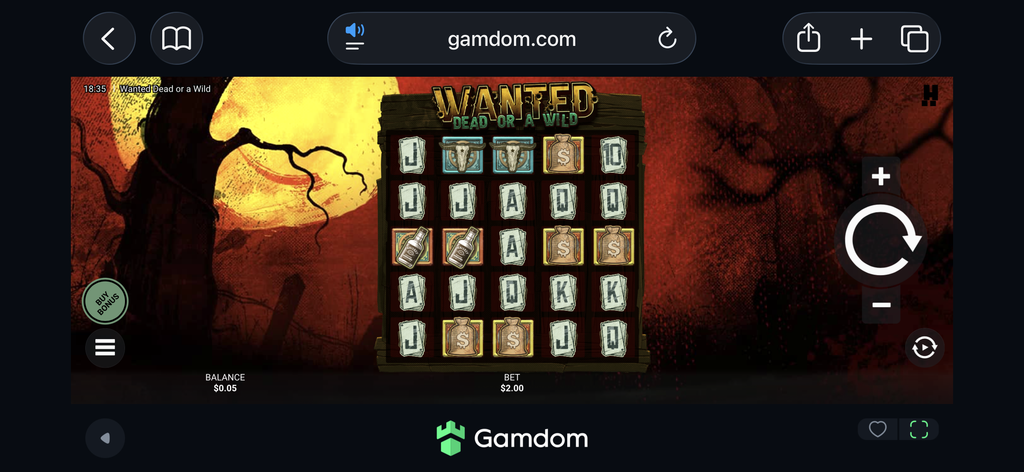
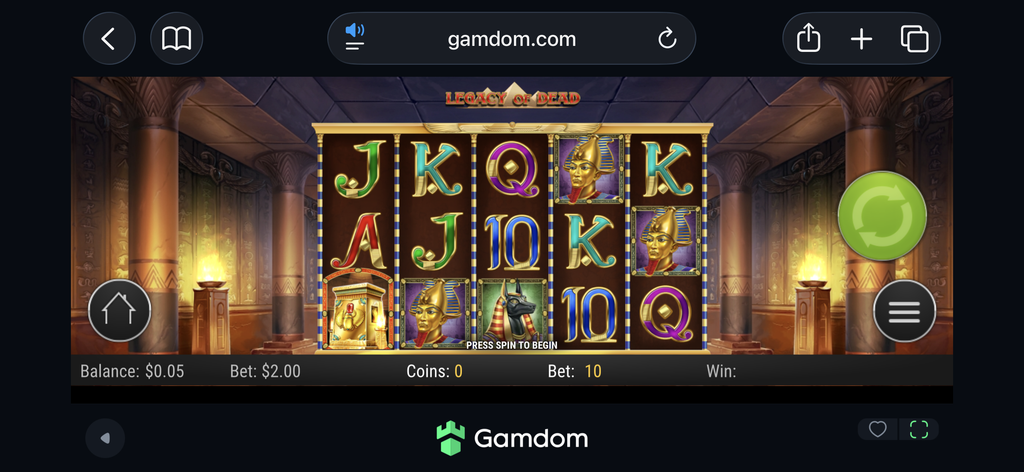
Play n Go Games
Can a casino change my RTP because I’m winning?
This needs separating into two completely different questions.
Can different RTP configurations of games exist? Yes.
As we’ve already seen, suppliers can make games available with multiple RTP configurations.
But that’s very different from claiming a casino is watching Joseph win and secretly changing Joseph’s individual RTP to make him lose.
I wouldn’t make an accusation like that without evidence.
Where a game is regulated, testing and monitoring requirements exist specifically around whether games perform according to their designed mathematics.
The practical lesson for me remains the same:
Check the RTP displayed for the game you’re actually being offered.
Can a casino bonus compensate for lower RTP?
This was one of the questions I struggled with during this guide because there isn’t a universal answer.
Imagine:
Casino A: $100 balance, games at 96.5% RTP.
Casino B: $100 deposit + $100 bonus, but the game is 94% RTP.
Initially I’d want Casino A because I hate deliberately choosing a lower RTP.
But Casino B has given me another $100.
So which is mathematically better?
You can’t answer it from those numbers alone.
I’d need to know Casino B’s:
- wagering requirement
- game contribution
- maximum bet
- maximum cashout
- excluded games
- bonus restrictions
- whether the bonus is cashable
- and exactly how the wagering is calculated.
That’s why a giant “200% BONUS” banner doesn’t automatically compensate for poor game mathematics.
You have to look underneath it.
Why I sometimes judge a casino by its RTP
RTP doesn’t only affect which slot I choose.
It affects how I judge the casino.
If I open several games from different providers and repeatedly find configurations below what I’m comfortable playing, I’ll probably stop depositing there.
Conversely, when I find a casino consistently offering the higher configurations of the games I want to play, that’s a major positive for me.
But I don’t recommend guessing RTP from how expensive a casino looks, how generous its promotions appear or how trustworthy its branding feels.
I’ve developed instincts after playing at a lot of casinos, but instinct isn’t evidence.
Opening the game information and reading the number is.
My personal RTP rule
After close to 20 years of playing slots, my rule is remarkably simple:
Check before you spin.
I generally look for around 96% RTP or higher.
I’ll sometimes accept around 95.5%.
Below that, I’m normally looking elsewhere.
That doesn’t mean 95.5% is an official dividing line between a good and bad slot. It isn’t.
It’s simply the level I’m personally prepared to play at.
And I certainly wouldn’t tell somebody that playing 97% rather than 94% means they’re going to win.
It doesn’t.
What I would tell them is that if the exact same game is available to me at 97% and 94%, why would I voluntarily choose the version carrying the larger theoretical house edge?
The biggest RTP mistake I see players make
It’s actually not misunderstanding the mathematics.
It’s never checking the number in the first place.
I’ve spoken to people who’ve played slots for years and barely know what RTP means.
They know which graphics they like.
They know their favourite bonus features.
They know which providers they enjoy.
But they’ve never opened the information screen and looked at the percentage.
I find that remarkable because it takes seconds.
RTP won’t tell you whether your next spin will win.
It won’t tell you whether your £100 will last an hour.
It won’t tell you when the next bonus is coming.
And it certainly won’t make a losing game suddenly “due” to pay.
What it does give you is one factual piece of information about the mathematical game you’re choosing to play.
For me, that’s enough reason to check it every single time.
Final verdict: does RTP really matter?
Yes — but probably not for the reason many players think.
I don’t check RTP because I believe a 96% slot owes me $96 for every $100 I wager.
I don’t check it because I think high RTP guarantees a long session.
And I don’t believe choosing the highest RTP means I’m going to win.
I check it because when I have a choice between two mathematical versions of a game, I’d rather choose the one with the smaller theoretical house edge.
That’s it.
After years of playing, it’s become automatic for me:
Open the game.
Open the information.
Find the RTP.
Then decide whether I’m playing.
If there’s one habit I’d like somebody to take away from this guide, it’s that.